TOKYO PLAYGROUND:
CURATED BY CIRCUMSTANCE
Client Personal Project
Year 2020
Year 2020
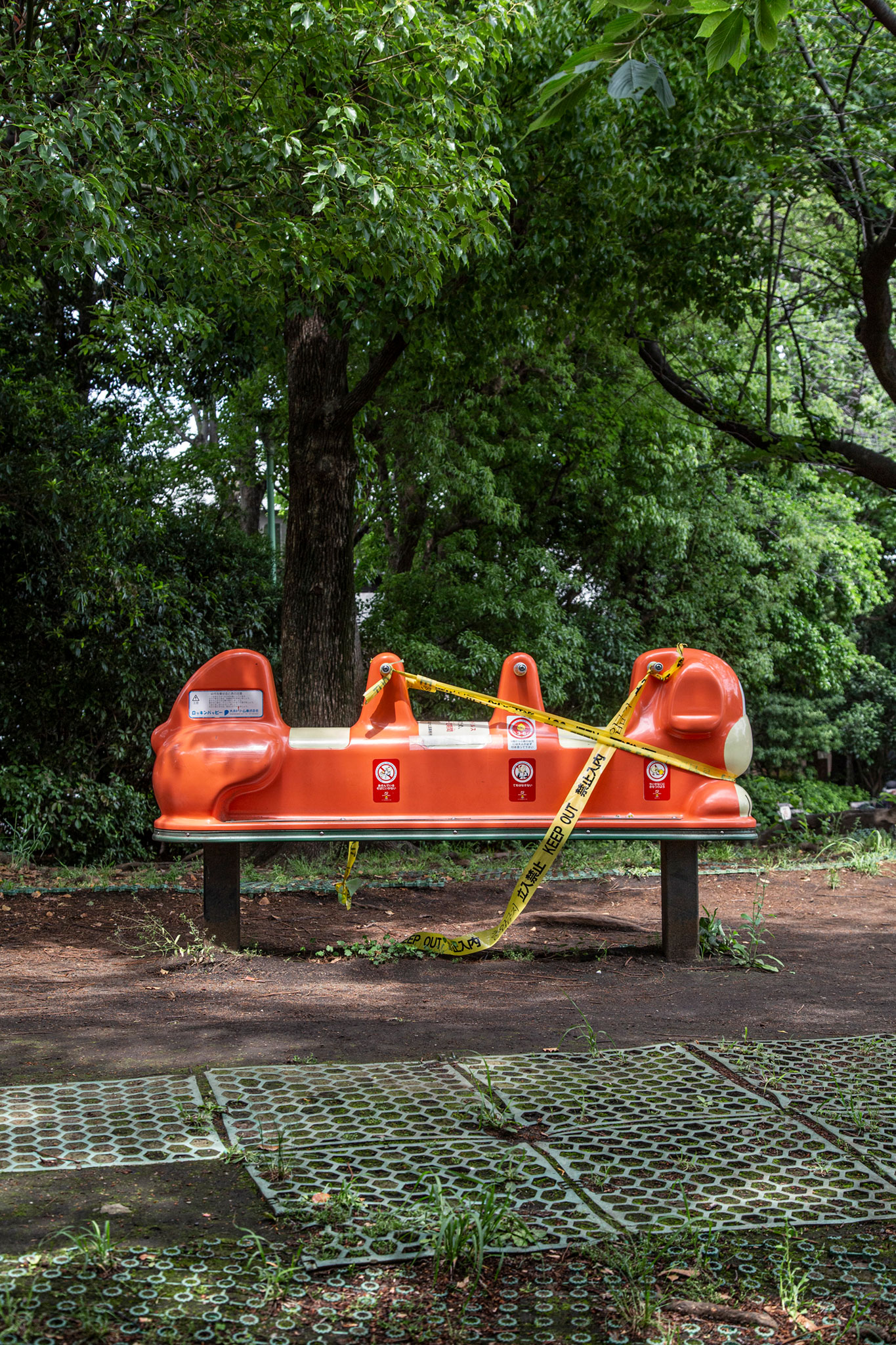
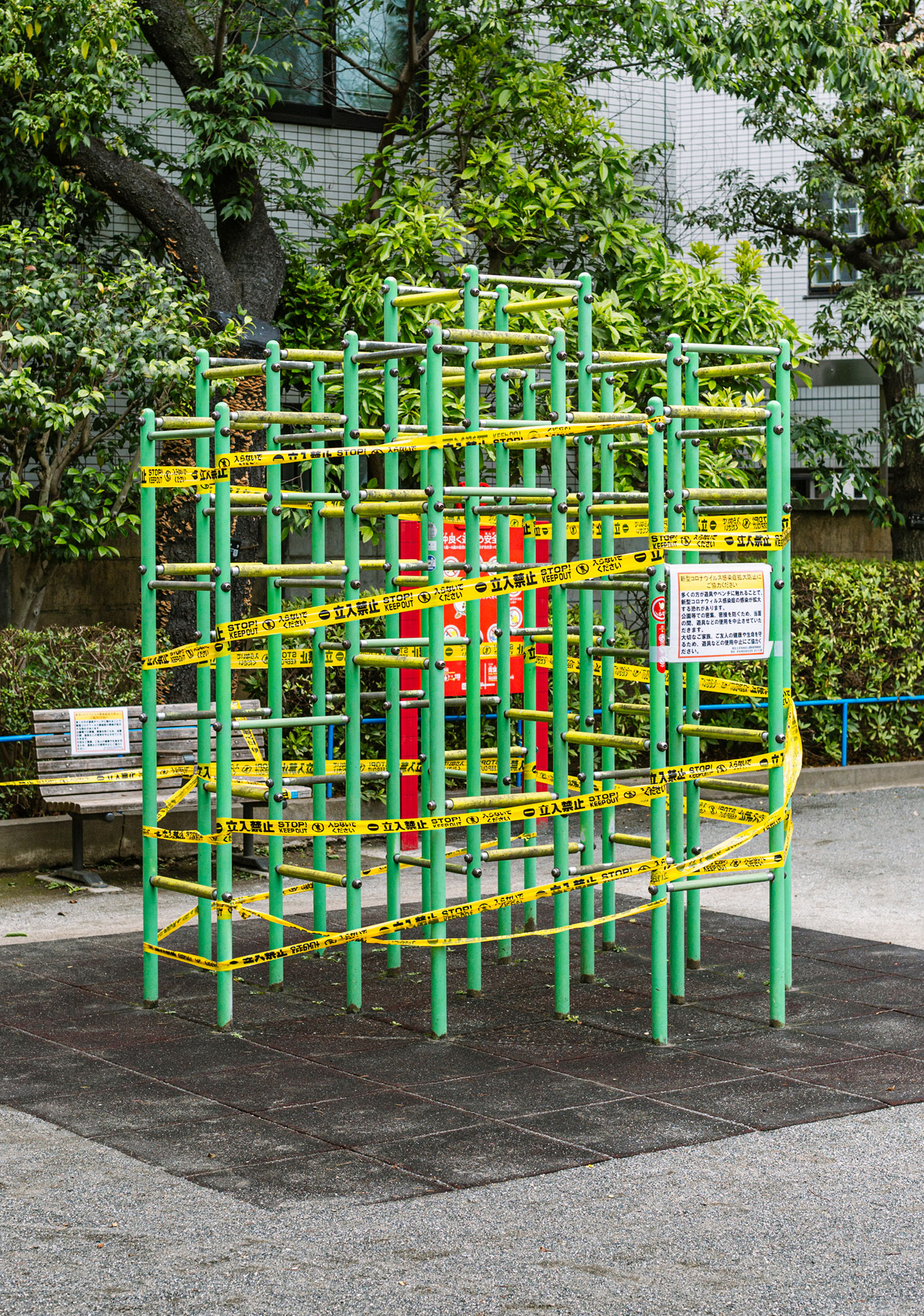
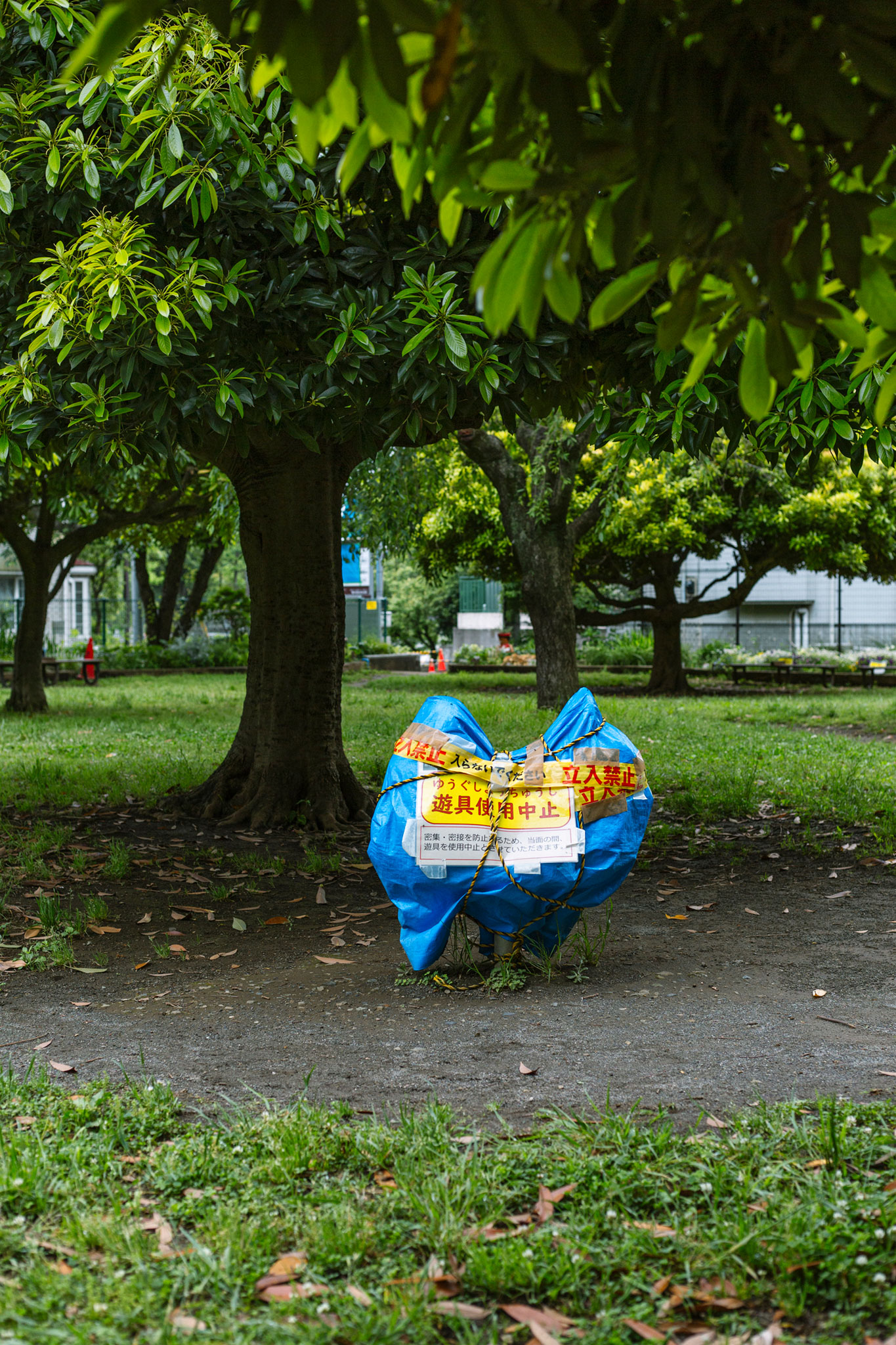
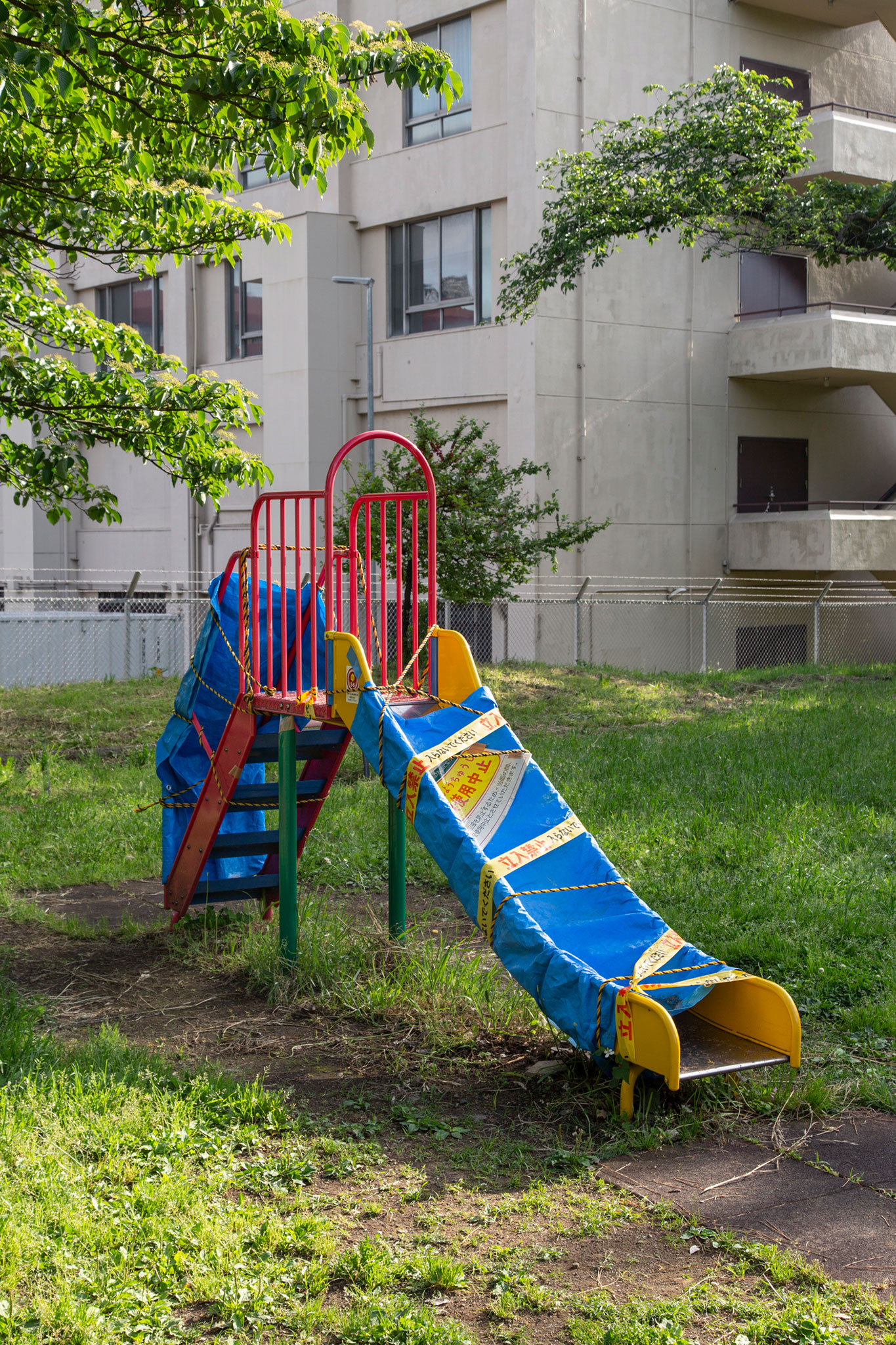
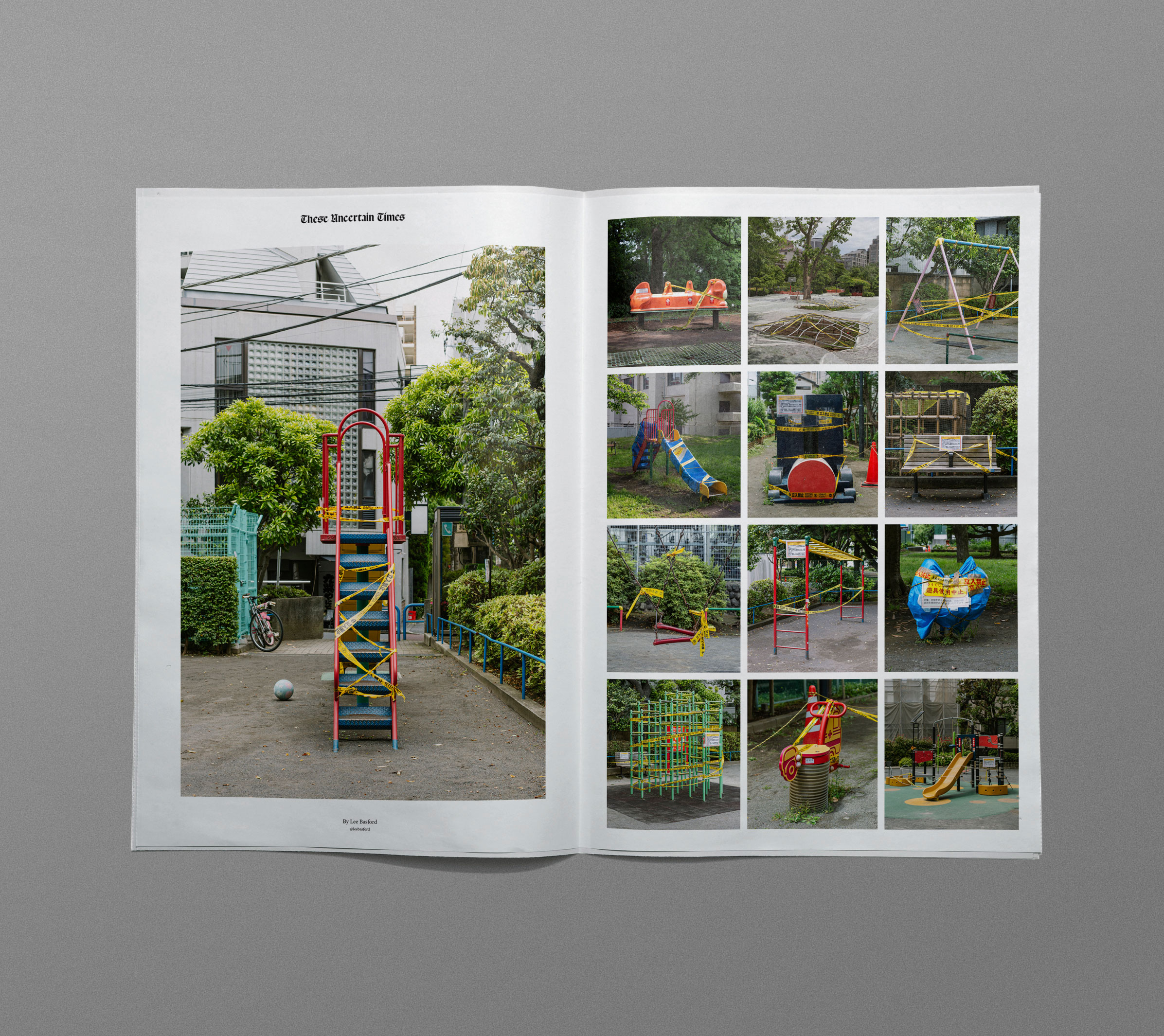
During the early months of the city’s voluntary lockdown, its parks and playgrounds were cordoned off: swings bound in yellow tape, slides wrapped like unfinished sculptures. These small, unassuming spaces tucked between apartment blocks had always been full of motion. Children, bicycles, the steady rhythm of conversation were now still, and in that stillness, something had changed. The city had quietened itself, not by force but by Tokyo’s peculiar brand of collective discipline. Depending on the neighbourhood, these interruptions of play were treated differently: some left untouched, others torn down, only to be replaced by workers the next morning.
I didn’t set out with a purpose; I was trying to see the city without its usual noise, and playgrounds quickly became the focus of that attention. They were suddenly, absurdly beautiful. A slide intersected by warning tape became something new. A set of swings, bound motionless, resembled a minimalist installation, an arrangement of form and colour. The tape and the signs became accidental marks in an unplanned exhibition where art had come to the city uninvited.
These playgrounds, stripped of their function, became sculptures of pause. Their purpose of movement, play and noise had been removed, leaving behind pure structure: wrapped in silence, recalling Christo and Jeanne-Claude’s temporary monuments. There was something of Masataka Nakano’s Tokyo Nobody in it also. Like his patient, impossible city, mine too was emptied, not by design but by intervention. Yet the effect was eerily similar. With its people gone, Tokyo seemed to breathe differently.
There are moments in every city when familiarity shifts. You notice the way light falls across a surface you have passed a thousand times. You notice the absence of footsteps. The camera, in those moments, does not simply document; it translates, turning caution tape into line, emptiness into form. The images from those weeks are, in one sense, about the pandemic. But in another, they are about how restriction can reframe what we see. The tape does more than restrict; it defines and reframes, asking us to look again at what is already there. In that sense, the city became a kind of open-air gallery, curated by circumstance.
Now those same parks are full again. The tape is gone. The swings move. The children shout. The air carries the same rhythm it did before. But when I look at the photographs, I do not see restriction. I see composition, and think of how the camera can elevate the accidental. These were not monuments of art, but they carried a similar charge: ordinary objects, reconfigured by context, became symbols of time suspended. The playgrounds of Tokyo were never meant to be sculptures. And yet, for a short time, they were. Works of a quiet stillness, drawn across the city in yellow lines. Reminding us that art sometimes happens when life pauses long enough to notice.



都市が自発的なロックダウンに入った初期の頃、公園や遊び場は立ち入り禁止となった。ブランコは黄色いテープで縛られ、滑り台は未完の彫刻のように包まれていた。
マンションのあいだにひっそりとある小さな公園。いつもは子どもたちの声や自転車の音、会話のリズムで満ちていたその場所が、いまは静止している。
その静けさの中で、何かが変わっていた。都市は自らを静めていた。強制ではなく、東京らしい集団の規律によって。
地域によって、その「遊びの中断」への反応は異なった。手つかずのまま残された場所もあれば、無造作に破られ、翌朝には再び整えられる場所もあった。
最初は、ただ都市がその音を失った姿を見たかっただけだった。
やがて、遊び場が目に留まるようになった。そこには、突然で、そして不思議な美しさがあった。
警告テープが交差する滑り台は、まるで新しい造形のように見えた。
動きを奪われたブランコは、ミニマルなインスタレーションのように、形と色の構成として立ち上がっていた。
テープや標識は、計画されぬ展示の中で偶然の線となり、招かれざる芸術が街に現れていた。
機能を失った遊び場は、「一時停止」の彫刻になった。
動きや音、遊びの目的を失い、構造だけが残った。それは静寂に包まれ、クリストとジャンヌ=クロードの一時的なモニュメントを思わせた。
そこには中野正貴の『TOKYO NOBODY』の気配もあった。彼の誰もいない都市のように、私の目の前の東京もまた、意図ではなく介入によって空にされた。
それでも、結果は不思議なほど似ていた。人が消えた東京は、別の呼吸をしているようだった。
どんな都市にも、親しさがふとずれる瞬間がある。
何度も通り過ぎた場所に落ちる光のかたちに気づくとき。
足音の消えた道の静けさに気づくとき。
その瞬間、カメラは記録するだけのものではなくなる。
それは翻訳するのだ。警告テープを線に、空白を形に。
あの数週間の写真は、一面ではパンデミックの記録だ。
だが同時に、制限が見ることをどう変えるかの記録でもある。
テープは遮るだけではない。定義し、枠を描き直す。
すでにあるものを、もう一度見つめることを促す。
その意味で、この都市は偶然に選ばれた野外ギャラリーになっていた。
いま、公園には再び人が戻っている。
テープは消え、ブランコは揺れ、子どもたちの声が響く。
空気は、以前と同じリズムを取り戻した。
それでも、写真を見るとき、私は制限を見るのではない。
そこに構図を見る。カメラが偶然をすくい上げる力を思う。
それは芸術のための記念碑ではなかった。
けれど、その空気には似た緊張が流れていた。
日常のものが、文脈によって形を変え、時を留める象徴となっていた。
東京の遊び場は、本来、彫刻ではなかった。
それでも、ほんの短いあいだ、確かにそうだった。
都市のあちこちに引かれた黄色い線が、静けさの作品を描いていた。
そして、人生がその形に気づくほどに静まったとき、
芸術はふと、そこに現れるのだ。