KATSUYA KAMO, 100 HEADPIECES
Client Gas as Interface
Year 2013
Year 2013
I didn’t know then what I see now. I wasn’t thinking in terms of legacy or how future generations would view his work. I carried a camera and a vague idea that that I was here to document, but not quite sure what to expect. I was thinking about how to move through a room without making a sound, how to let a room speak without imposing myself on it, how to wait until some quiet thing shaped itself into view. Looking back, what feels striking isn’t just what I photographed but that I was willing to simply be present without knowing why it mattered.
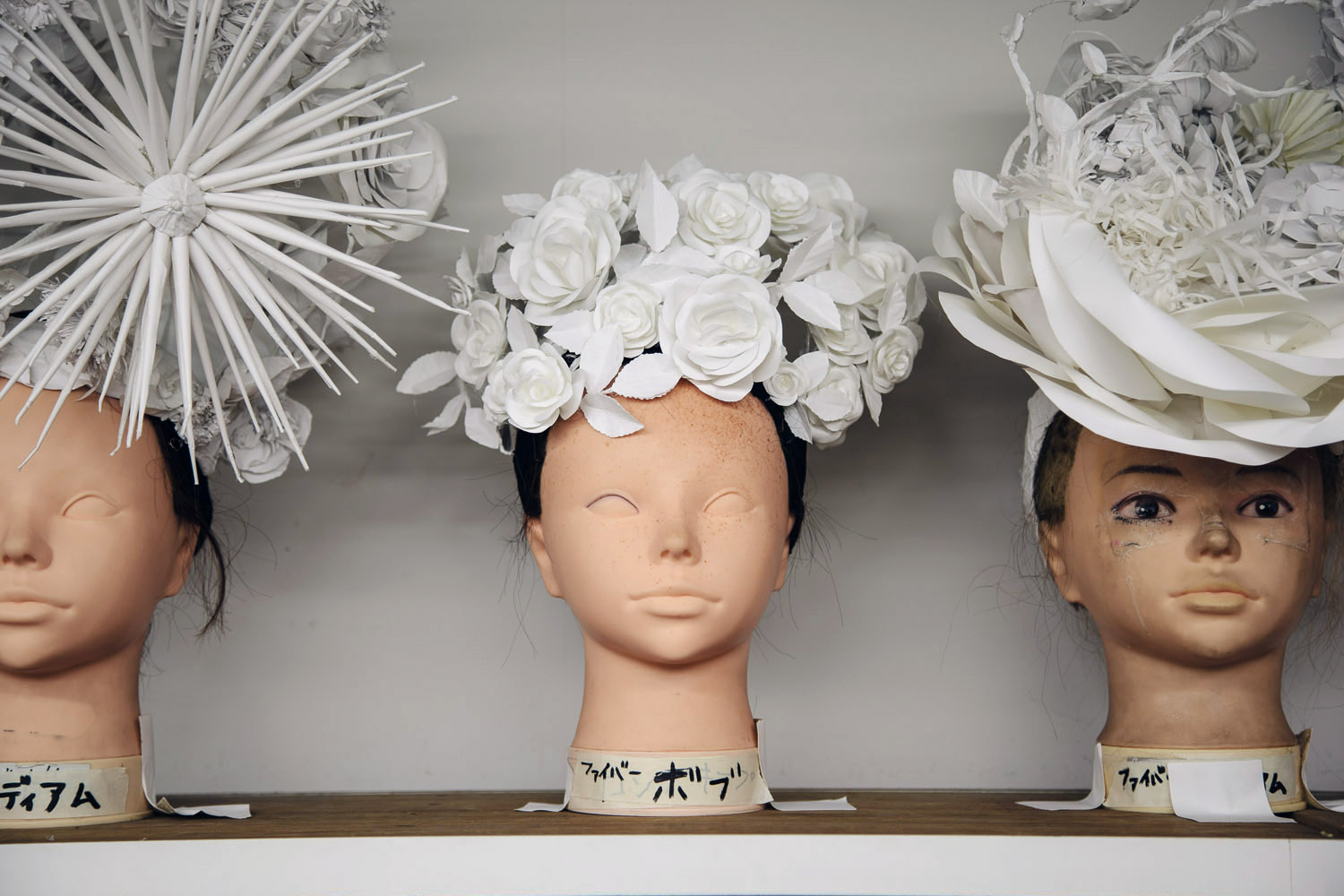
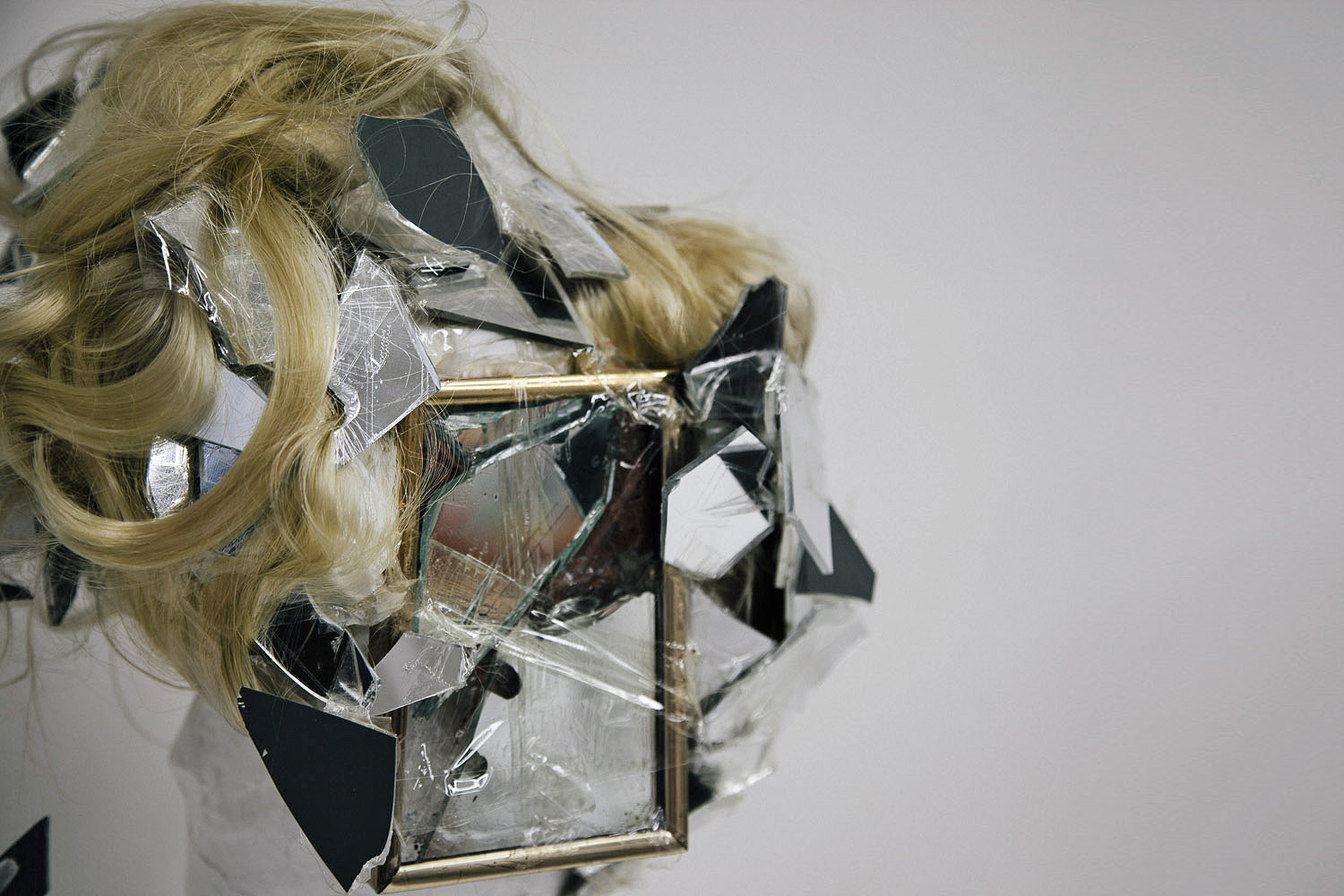
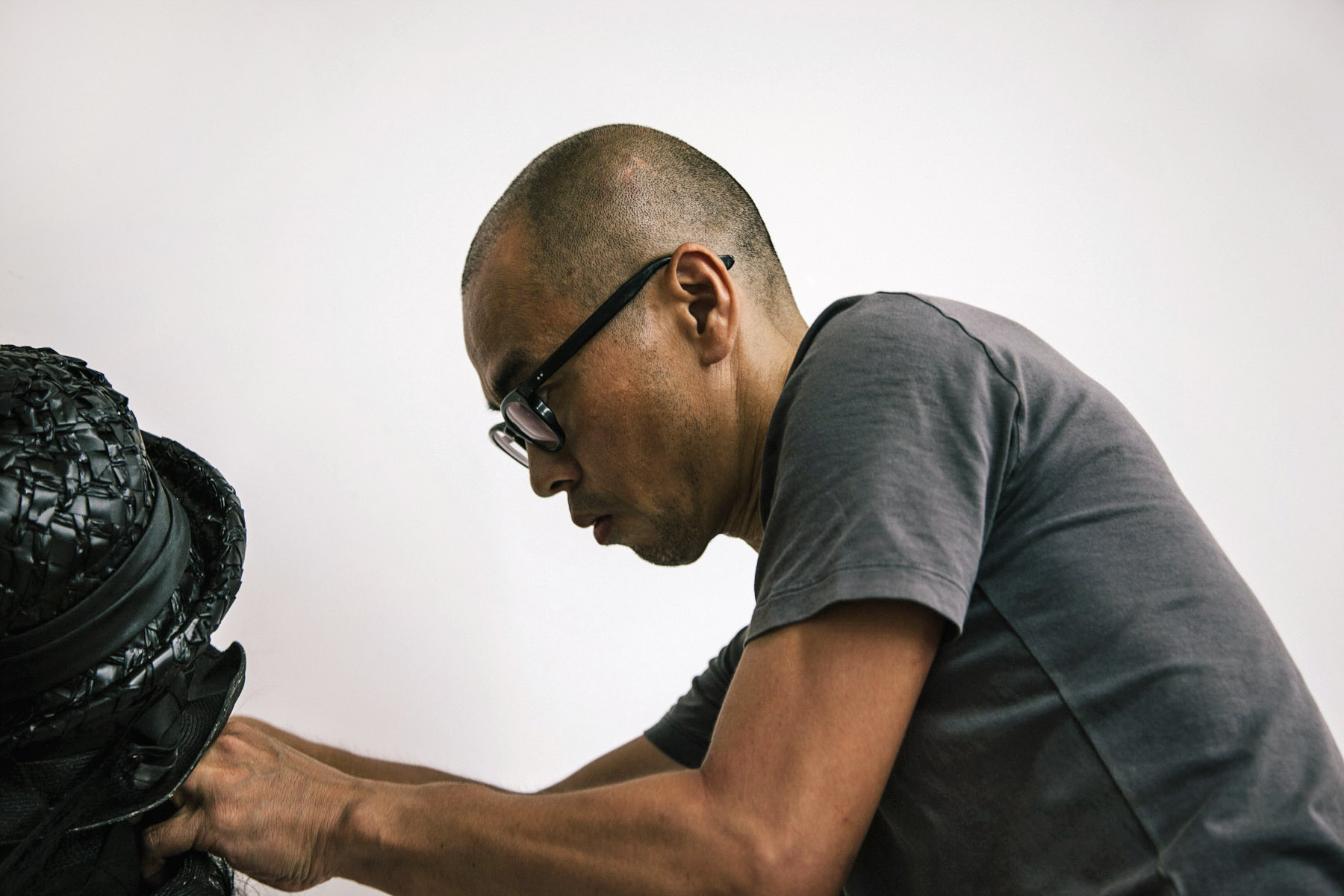
In the weeks before his retrospective at the Laforet Museum in Harajuku, I photographed Katsuya Kamo as was preparing for 100 Headpieces, an exhibition presenting more than one hundred of his creations and a reconstruction of his studio to the public for the first time. I wasn’t thinking about endings or history. I was thinking about how to occupy a busy room with minimal disturbance and how to let the rhythm unfold without interference.
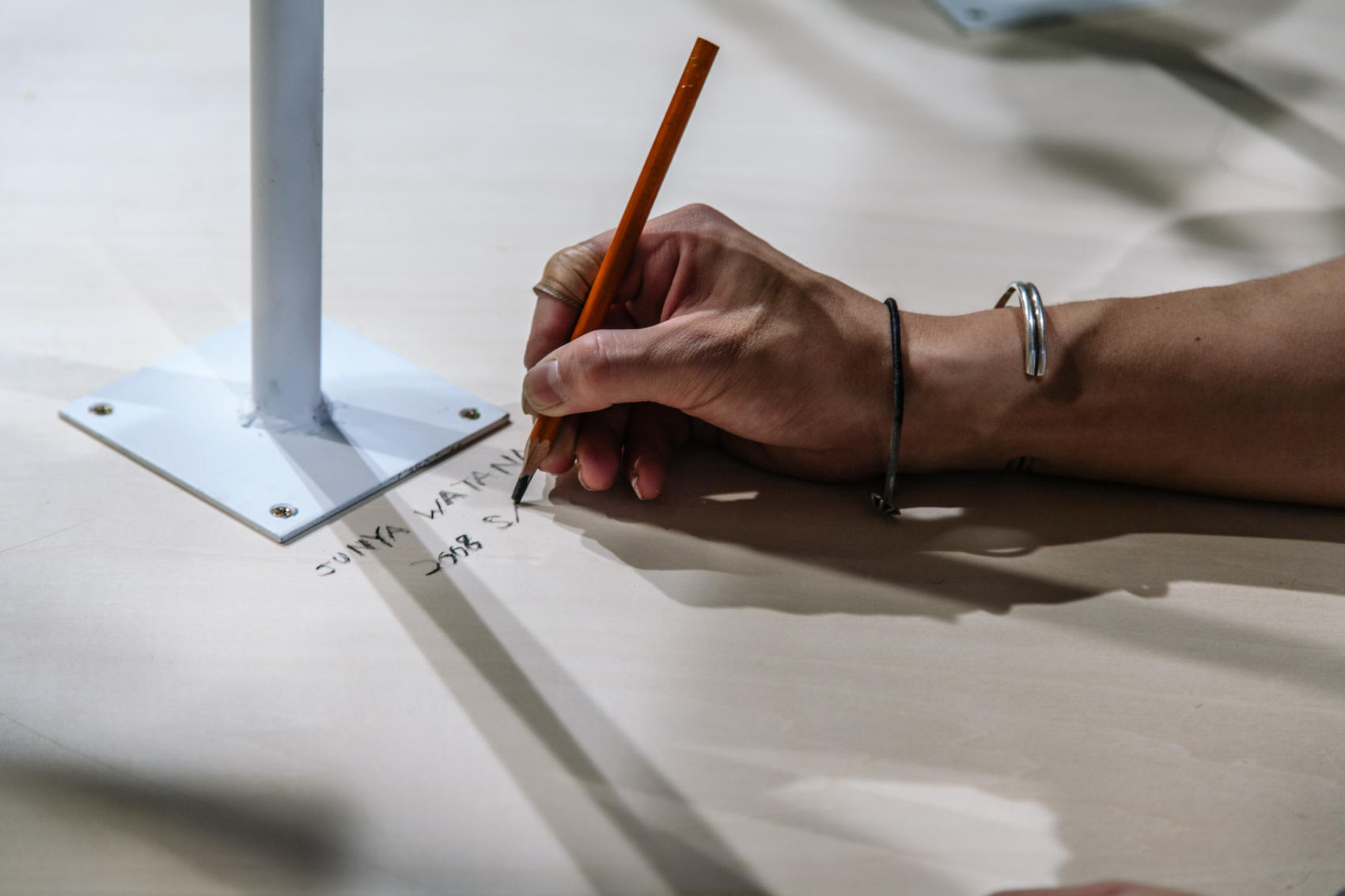
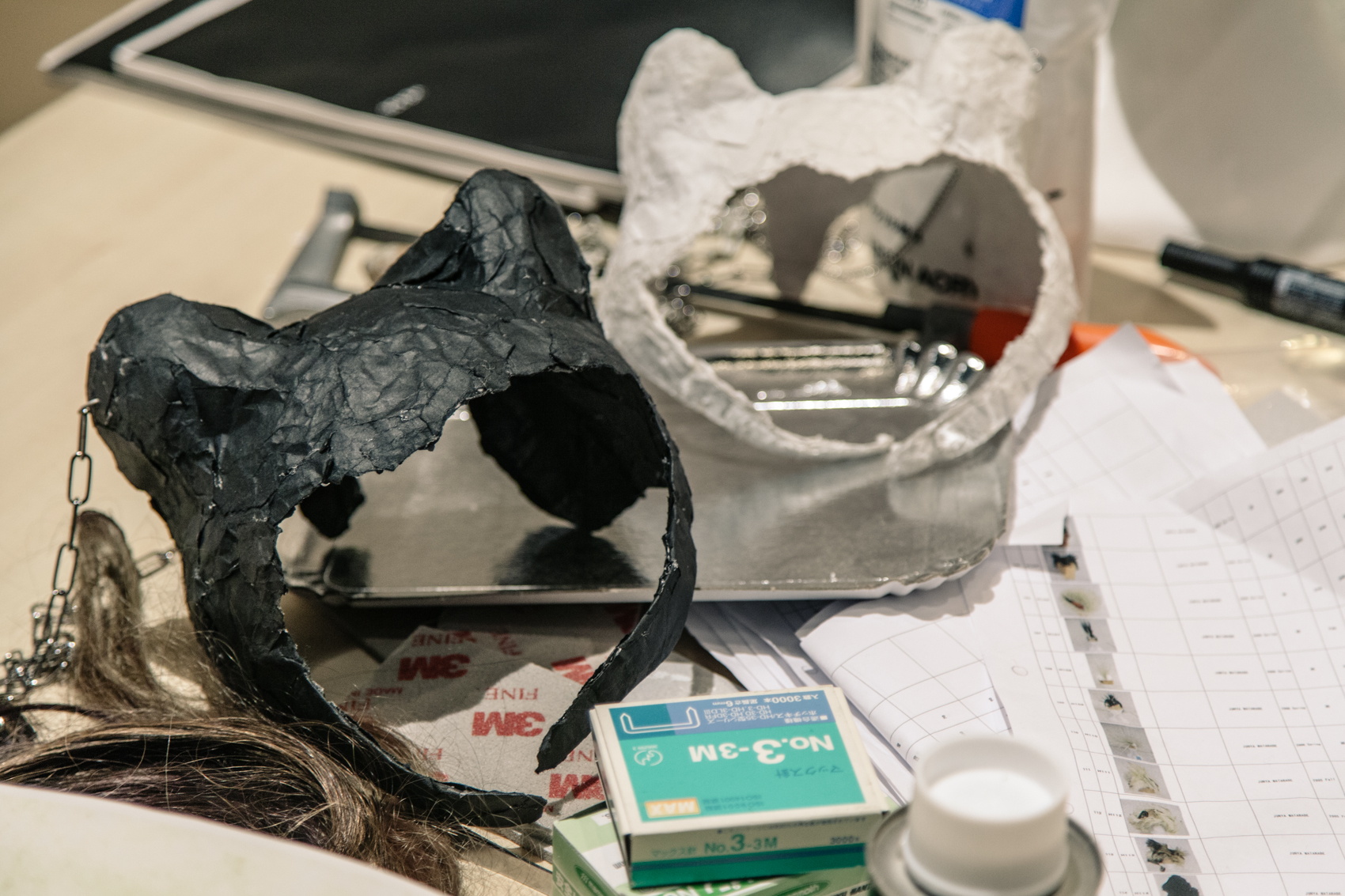
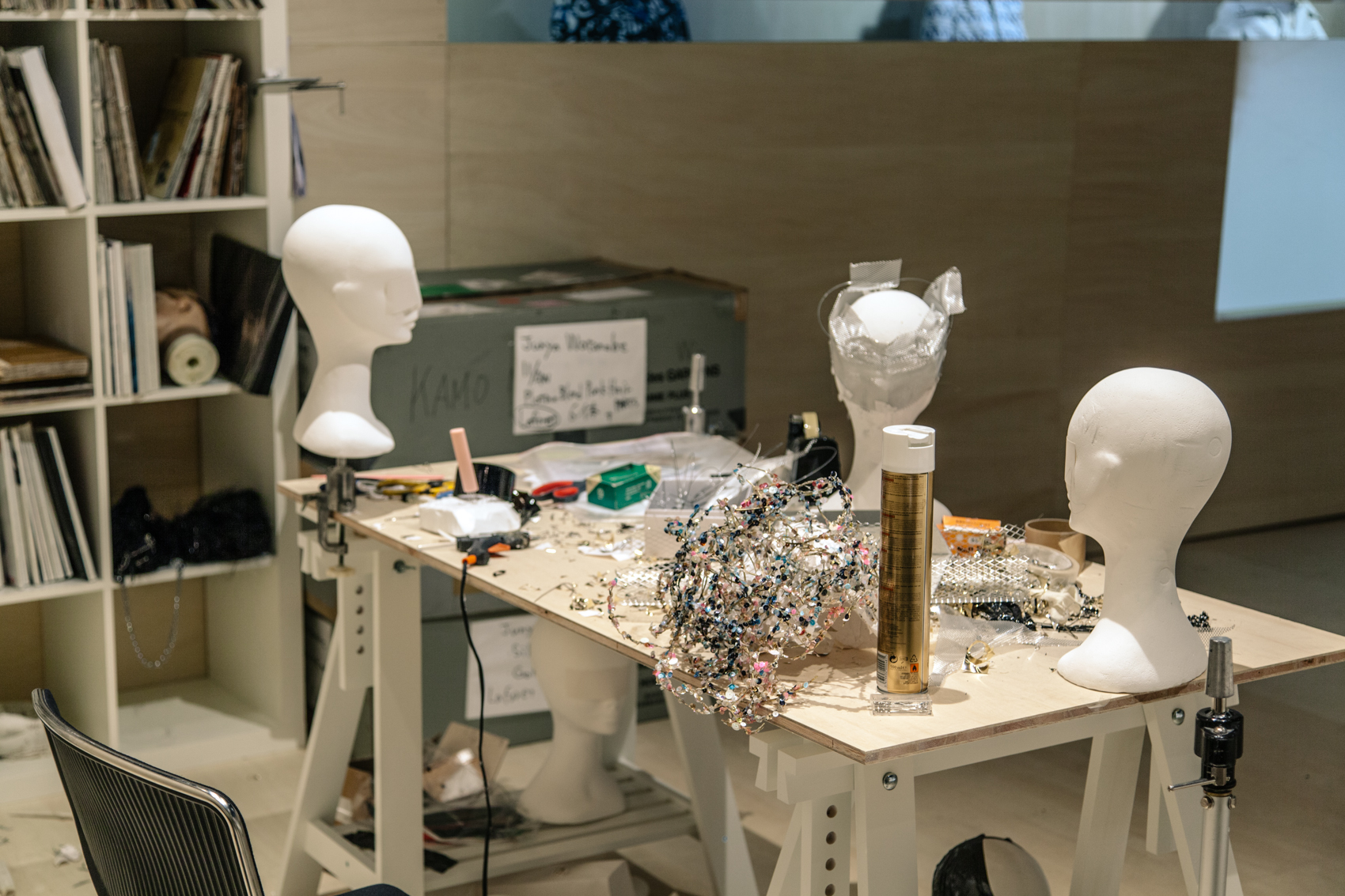
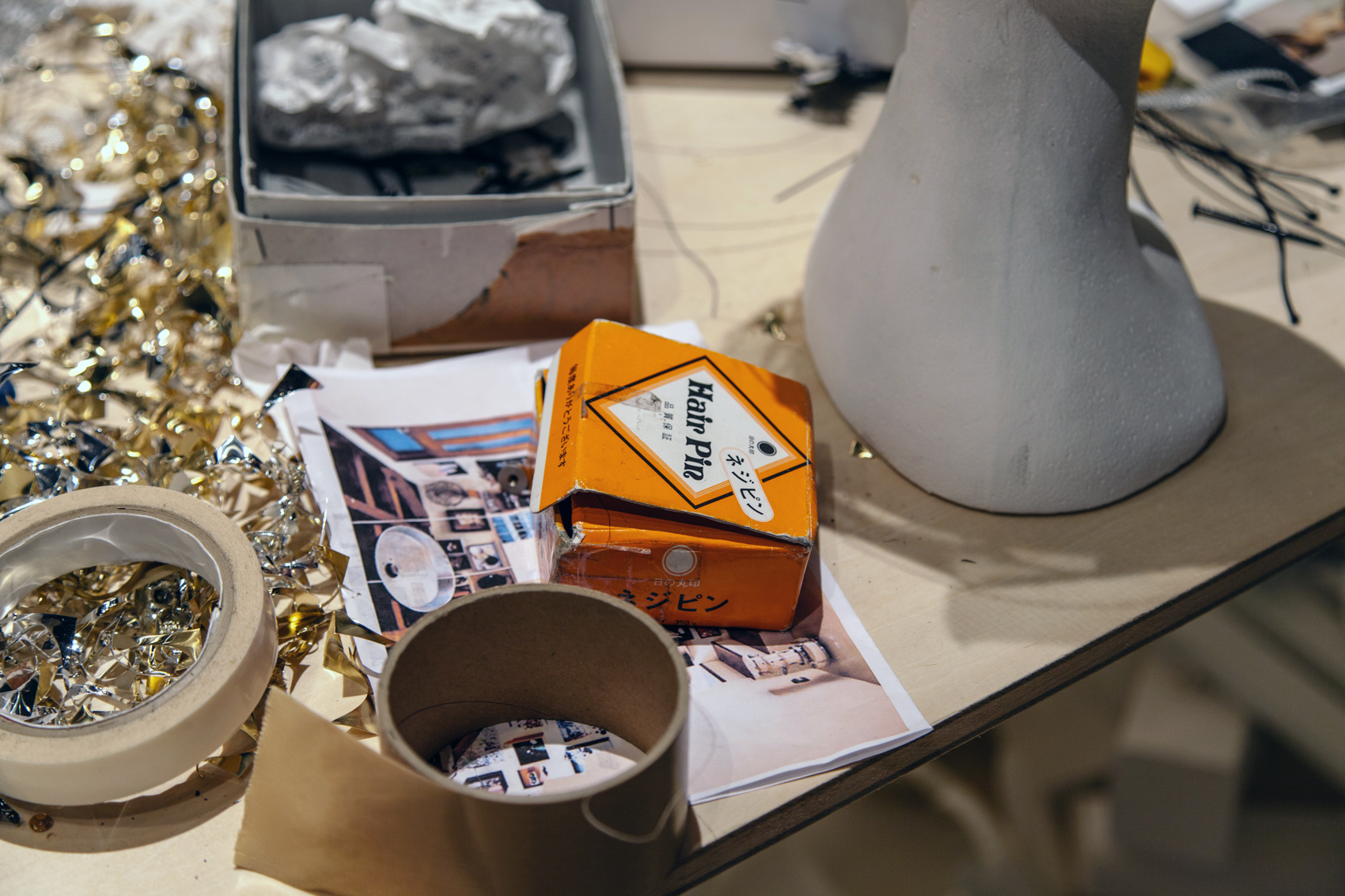
The studio was alive but contained, its everyday clutter edged with urgency. Tables held feathers, paper, thread, glue guns and pliers like fragments waiting to be gathered. Boxes with legendary names like Junya Watanabe were written in marker pen, piled in corners and corridors, open and half‑sealed, waiting to be filled or unpacked as pieces were chosen, packed, moved or prepped for the exhibition. At one point Kamo was showing the Helmut Newton's photo book “Portraits" while explaining the type of soft back format he wanted his book to be. It was a catalogue that accompanied Newton’s exhibition at the Fukuoka Prefectural Museum of Art in 1989, Kamo’s home town. Nothing was staged for me. Nothing was cleared for the camera. I did not rearrange objects or ask for repetition. Instead I tried to respond to what was already there, to the way the room composed itself. The photographs came from staying still long enough for something to settle into view.
I was less drawn to the finished headpieces than to the activity around them. A hand lingering before a decision. A tool set down mid‑gesture. Materials waiting as though suspended in thought. And among the tools and half‑made forms, the boxes seemed to capture the pulse of preparation itself—edges of taped cardboard, scuffed labels marking sections of works soon to be shown. I tried to record those intervals without dramatising them, letting what was already present come forward on its own terms.
In the weeks before his retrospective at the Laforet Museum in Harajuku, I photographed Katsuya Kamo as was preparing for 100 Headpieces, an exhibition presenting more than one hundred of his creations and a reconstruction of his studio to the public for the first time. I wasn’t thinking about endings or history. I was thinking about how to occupy a busy room with minimal disturbance and how to let the rhythm unfold without interference.
The studio was alive but contained, its everyday clutter edged with urgency. Tables held feathers, paper, thread, glue guns and pliers like fragments waiting to be gathered. Boxes with legendary names like Junya Watanabe were written in marker pen, piled in corners and corridors, open and half‑sealed, waiting to be filled or unpacked as pieces were chosen, packed, moved or prepped for the exhibition. At one point Kamo was showing the Helmut Newton's photo book “Portraits" while explaining the type of soft back format he wanted his book to be. It was a catalogue that accompanied Newton’s exhibition at the Fukuoka Prefectural Museum of Art in 1989, Kamo’s home town. Nothing was staged for me. Nothing was cleared for the camera. I did not rearrange objects or ask for repetition. Instead I tried to respond to what was already there, to the way the room composed itself. The photographs came from staying still long enough for something to settle into view.
I was less drawn to the finished headpieces than to the activity around them. A hand lingering before a decision. A tool set down mid‑gesture. Materials waiting as though suspended in thought. And among the tools and half‑made forms, the boxes seemed to capture the pulse of preparation itself—edges of taped cardboard, scuffed labels marking sections of works soon to be shown. I tried to record those intervals without dramatising them, letting what was already present come forward on its own terms.



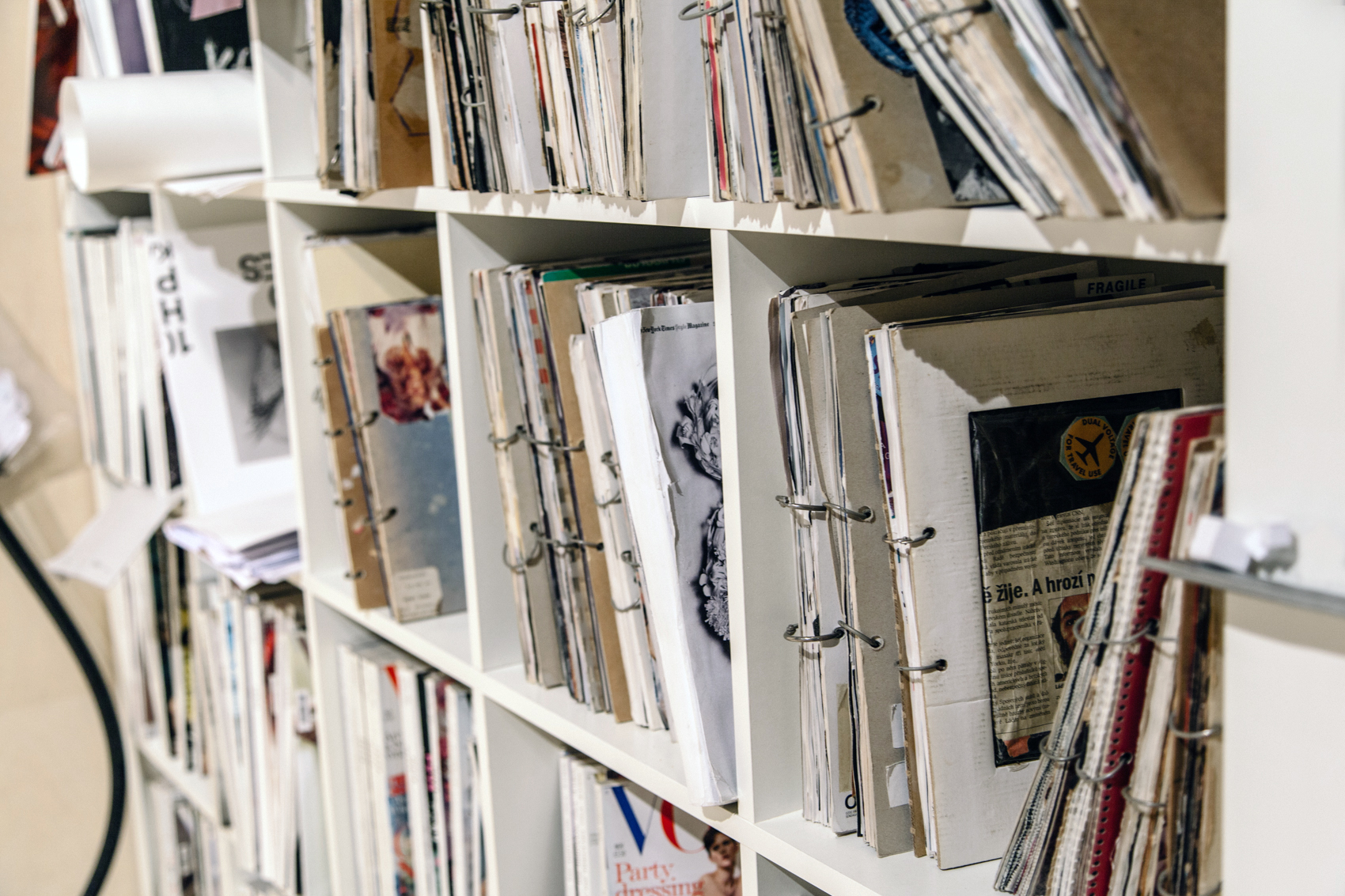


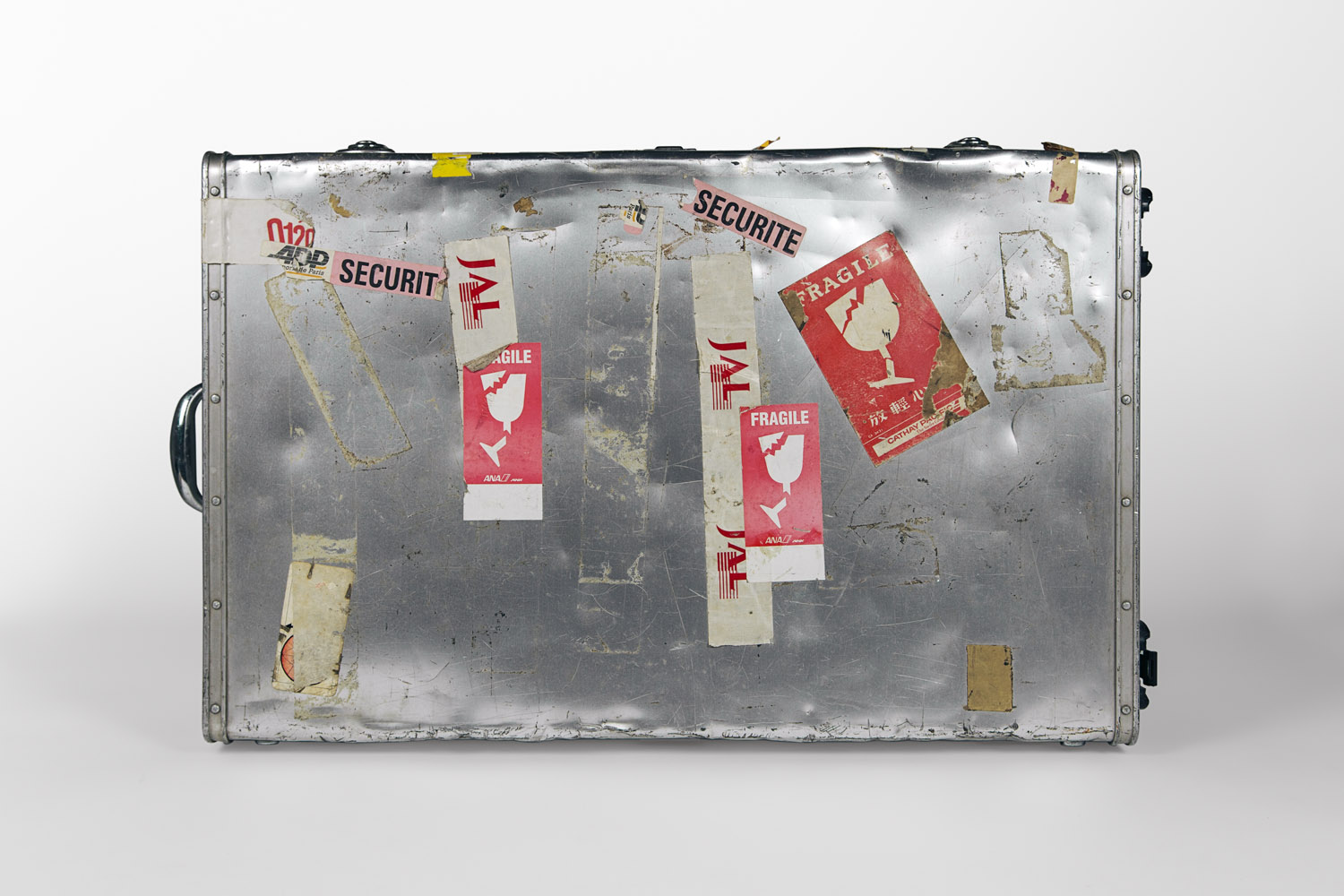
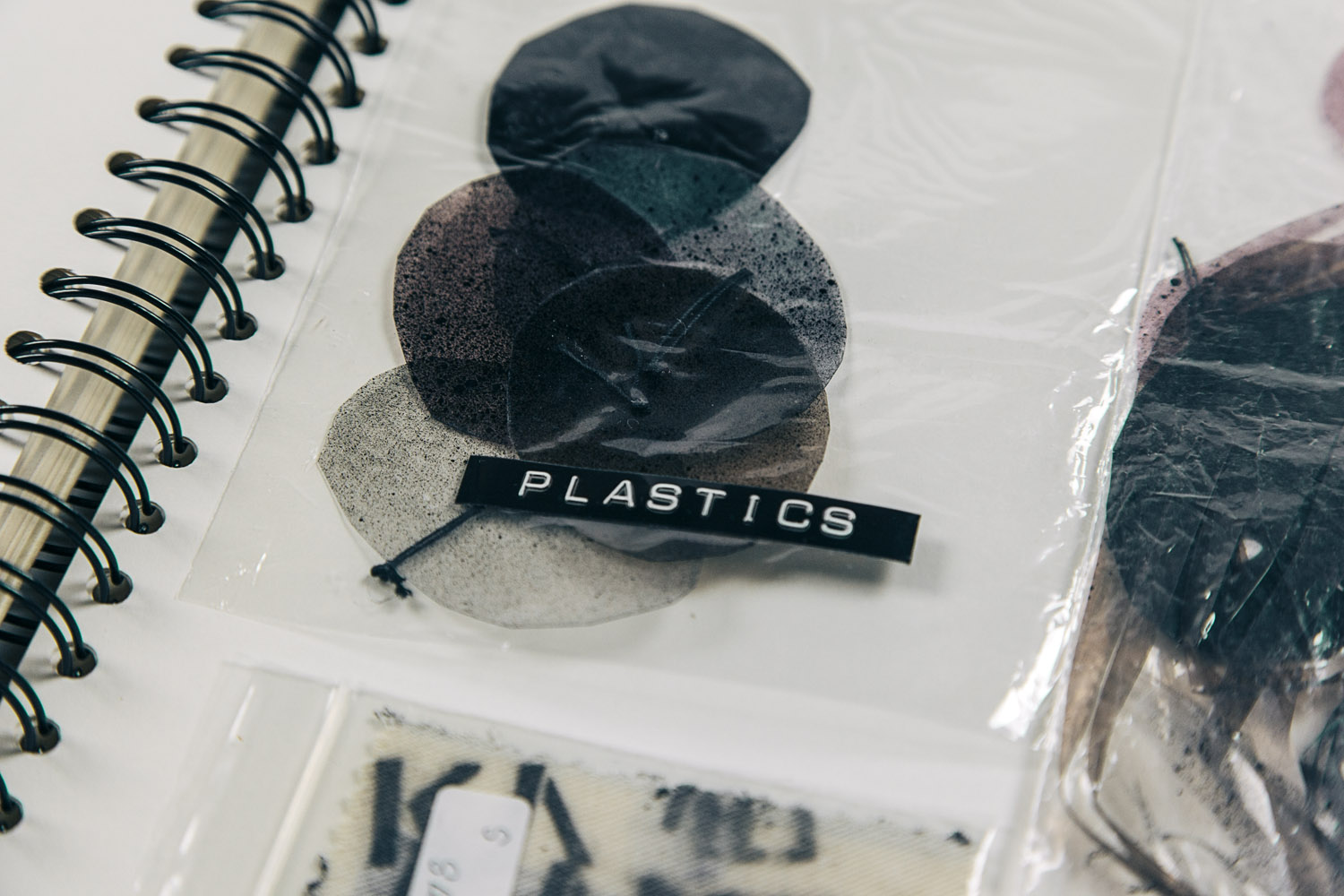
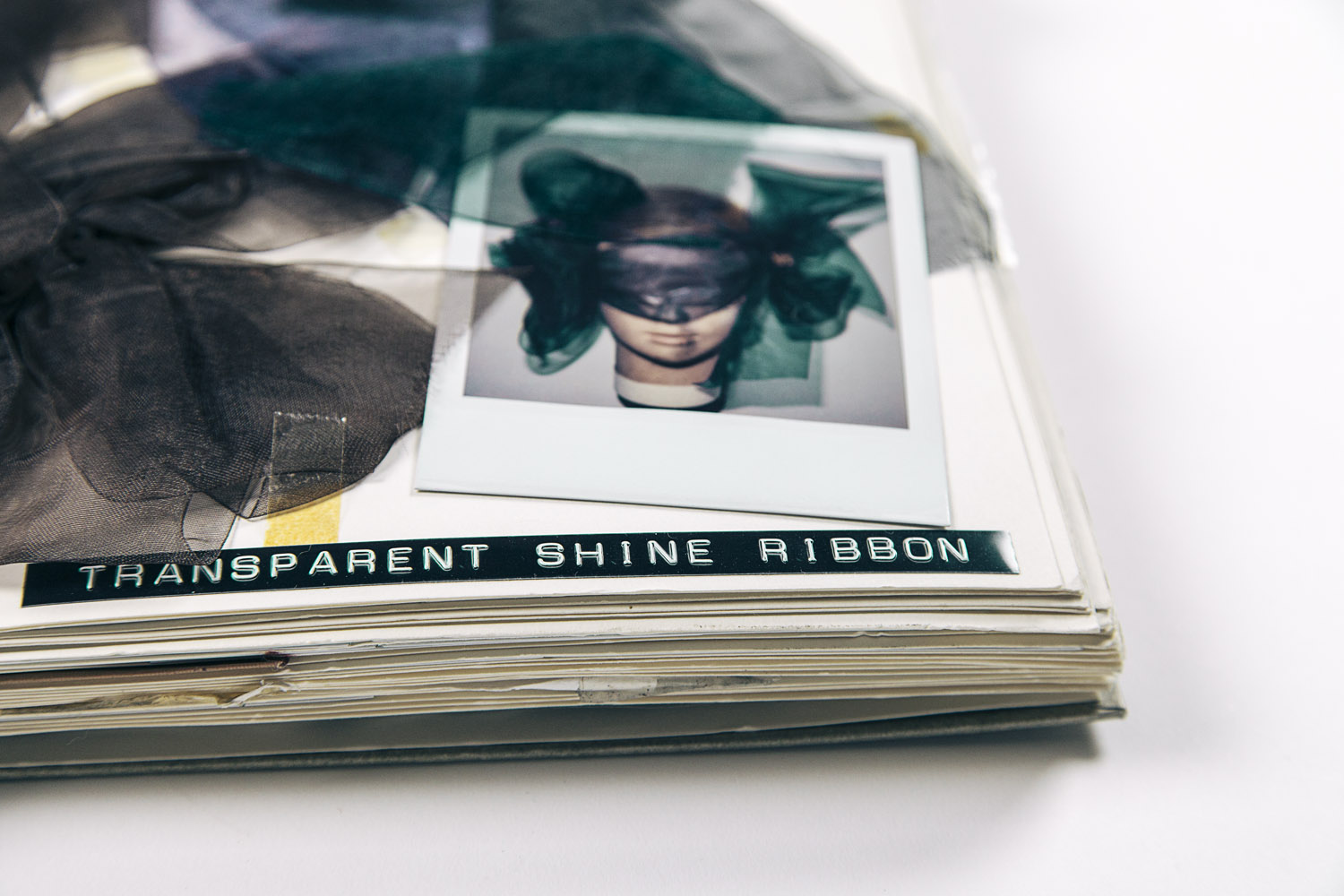
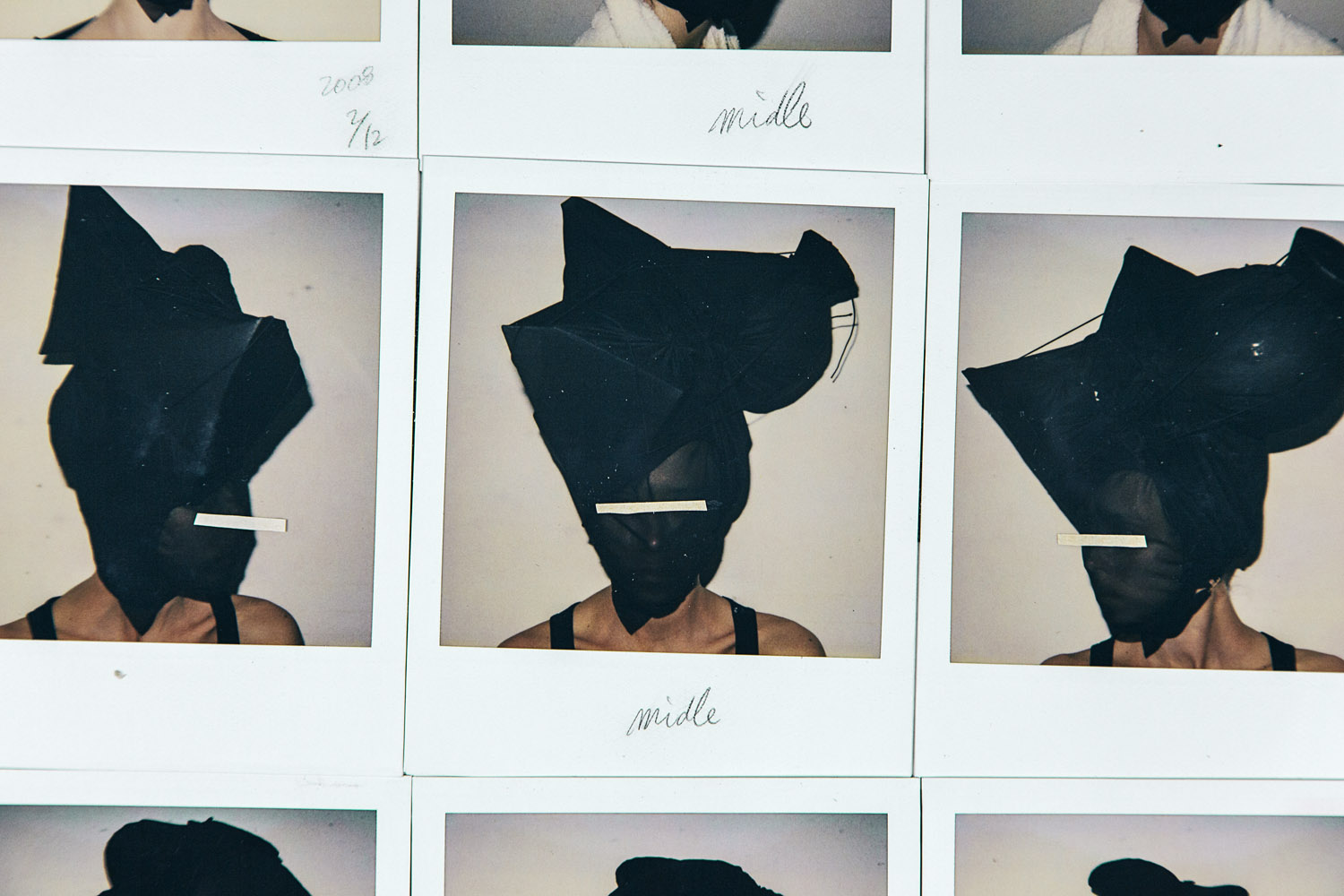
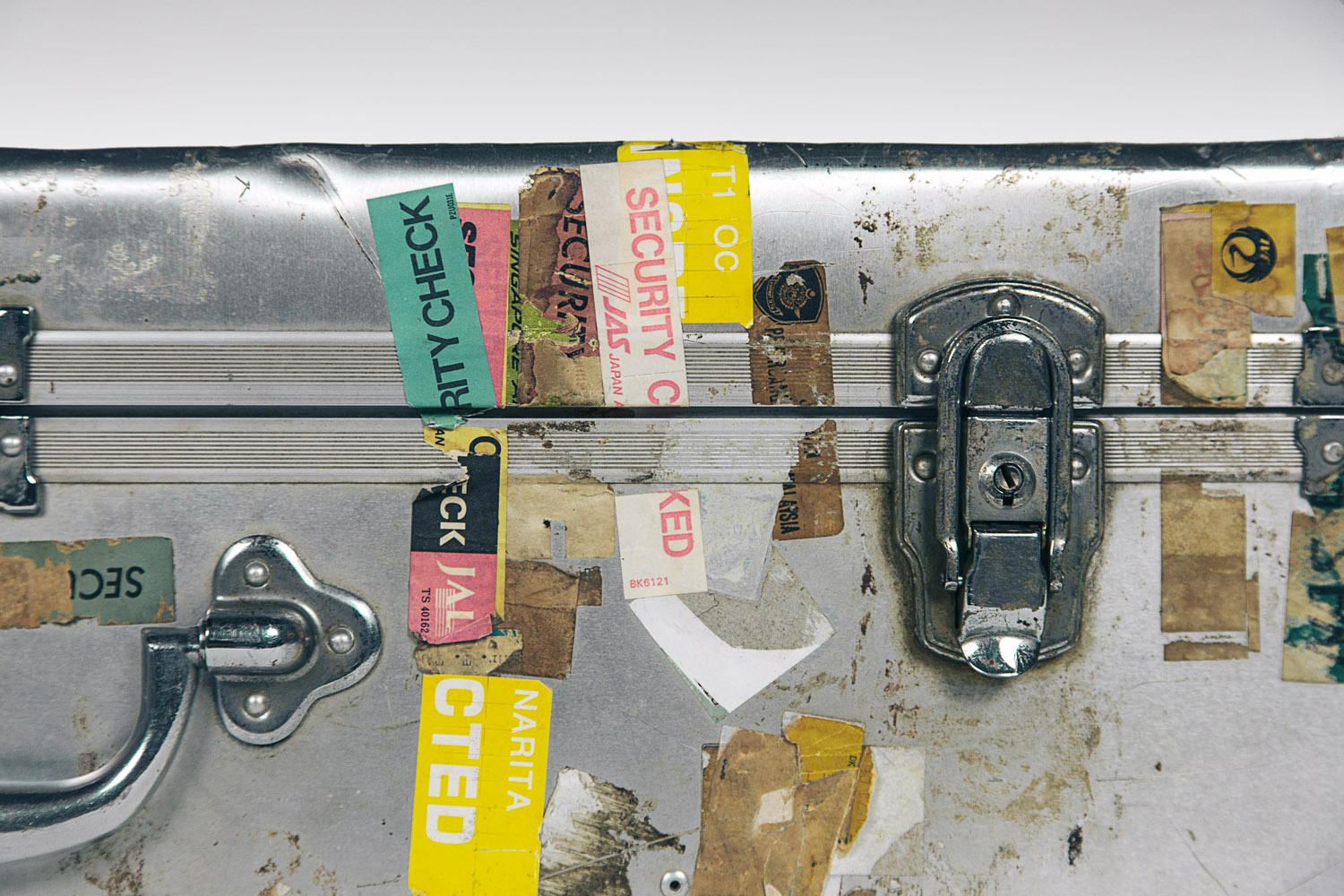
The following day I asked to photograph a battered metal suitcase, visible with a history of travel. It was filled with thick sketchbooks that covered years of research, ideas and experiments with materials and techniques.Working documents but works of art in their own rite. The camera recorded them in the same way it recorded everything else, as objects in use.
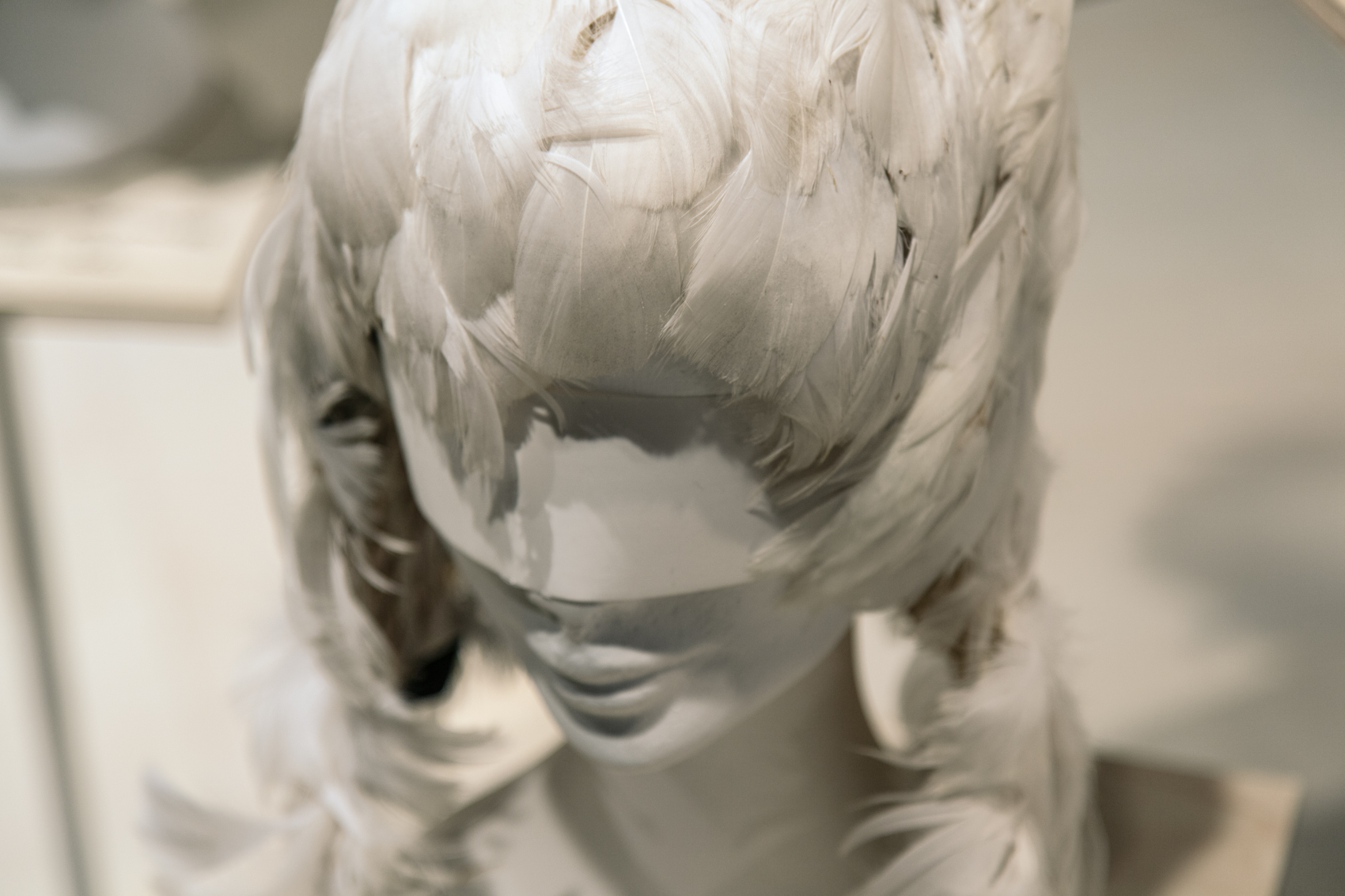
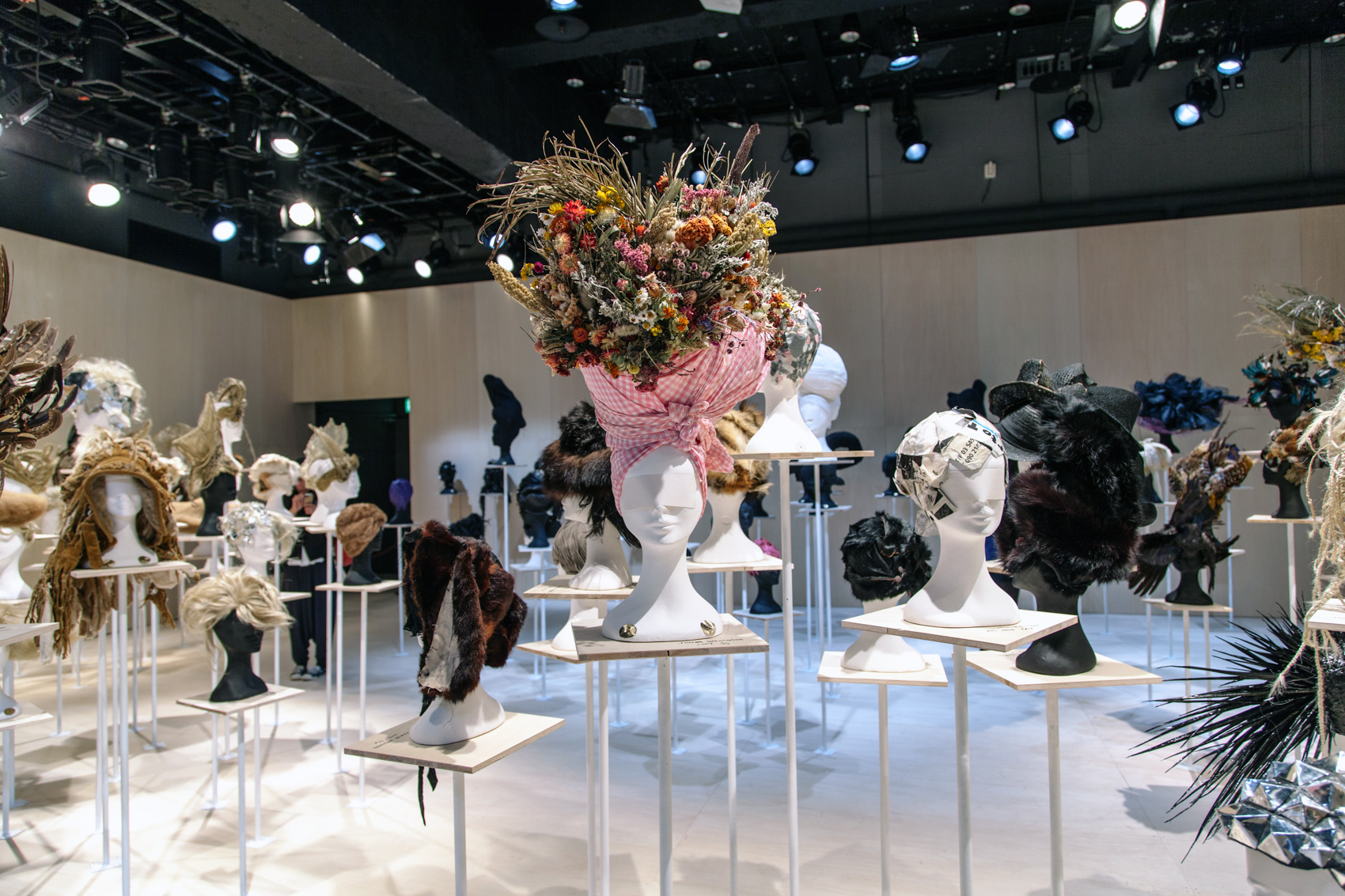
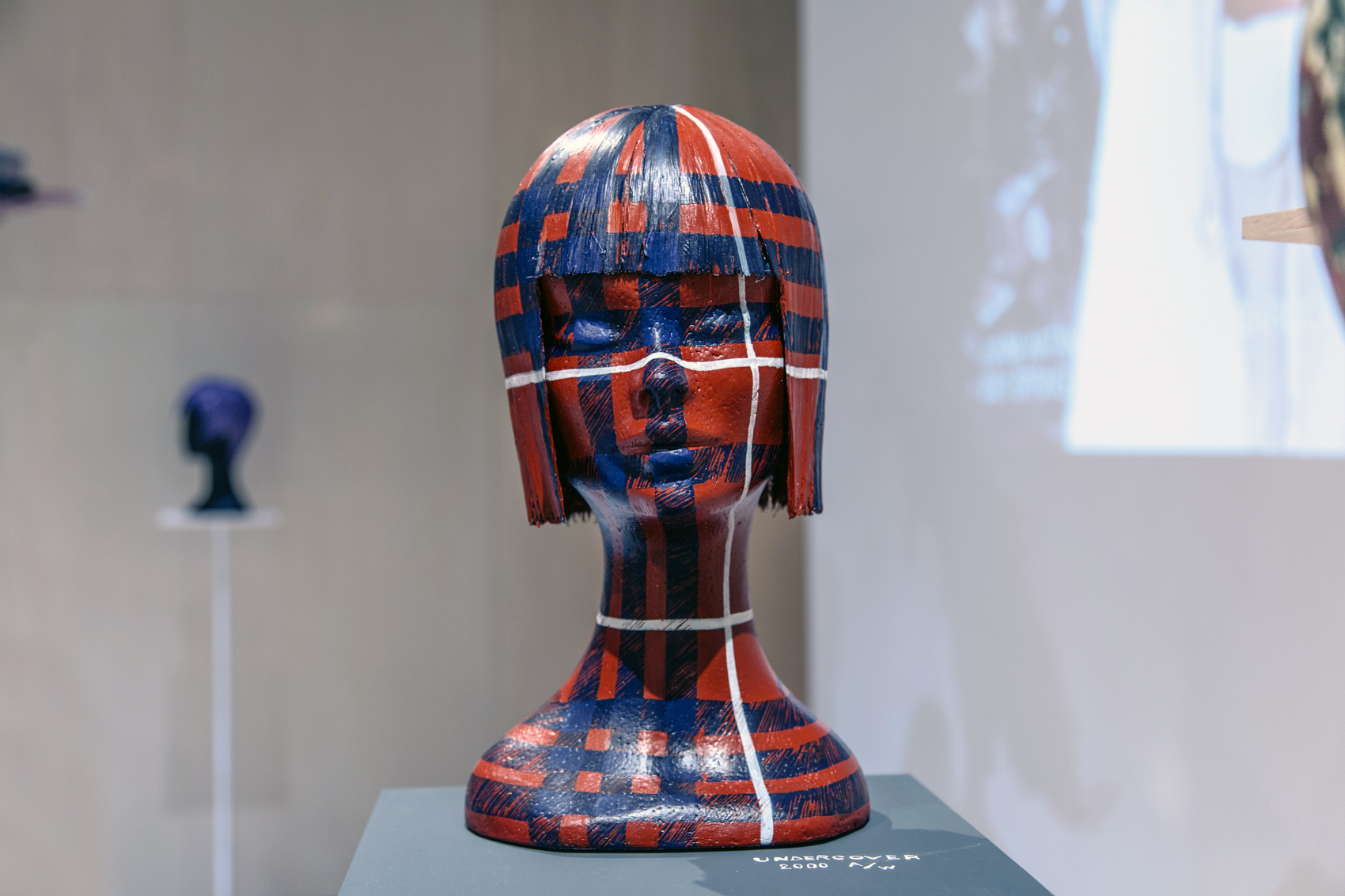
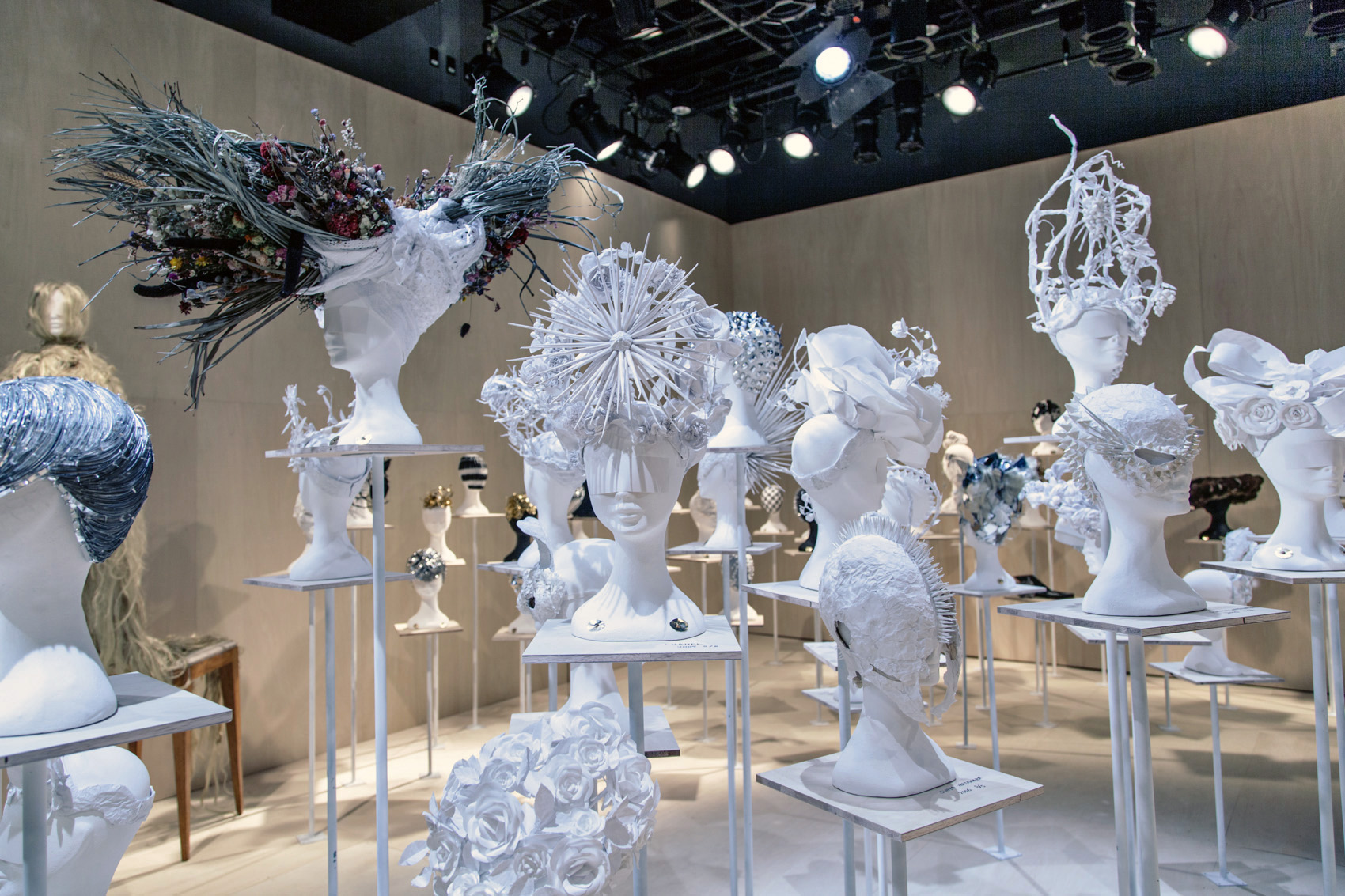
At the exhibition space in Laforet, the dynamic changed. Pieces that had lived in motion and chaos now stood under perfect lighting and set at a distance from the bodies that once made them. The headpieces, many conceived for runways and fashion shows around the world, felt both familiar and distant in their gallery arrangements. I thought about restraint and about letting the structure of a space speak without insistence. I photographed the gaps between objects, the way shadows pooled on the walls and the slight tilt of a stand. I was documenting an arrangement that was itself temporary.
At the time, I had no sense of how these images might be read later. They were not intended as memorial or archive. They were notes, a way of marking that these objects and this mode of working occupied a particular room in a particular season. Their future weight was not visible to me then.
To document something without knowing its future weight demands a certain neutrality, not indifference but steadiness. The camera does not predict. It registers. Looking back, what these photographs show is not an icon or a conclusion. They show a practice underway and a space holding it briefly before it changed.
The exhibition coincided with the release of a book by Gas as Interface.
At the exhibition space in Laforet, the dynamic changed. Pieces that had lived in motion and chaos now stood under perfect lighting and set at a distance from the bodies that once made them. The headpieces, many conceived for runways and fashion shows around the world, felt both familiar and distant in their gallery arrangements. I thought about restraint and about letting the structure of a space speak without insistence. I photographed the gaps between objects, the way shadows pooled on the walls and the slight tilt of a stand. I was documenting an arrangement that was itself temporary.
At the time, I had no sense of how these images might be read later. They were not intended as memorial or archive. They were notes, a way of marking that these objects and this mode of working occupied a particular room in a particular season. Their future weight was not visible to me then.
To document something without knowing its future weight demands a certain neutrality, not indifference but steadiness. The camera does not predict. It registers. Looking back, what these photographs show is not an icon or a conclusion. They show a practice underway and a space holding it briefly before it changed.
The exhibition coincided with the release of a book by Gas as Interface.